The Women's Football World Cup Draw: An In-Depth Tactical Breakdown 🏆
The draw ceremony for the FIFA Women's World Cup isn't just a procedural event—it's a dramatic spectacle that sets the stage for the entire tournament. This exclusive guide dives deep into the mechanics, strategies, and potential outcomes of the draw, providing insights you won't find anywhere else.
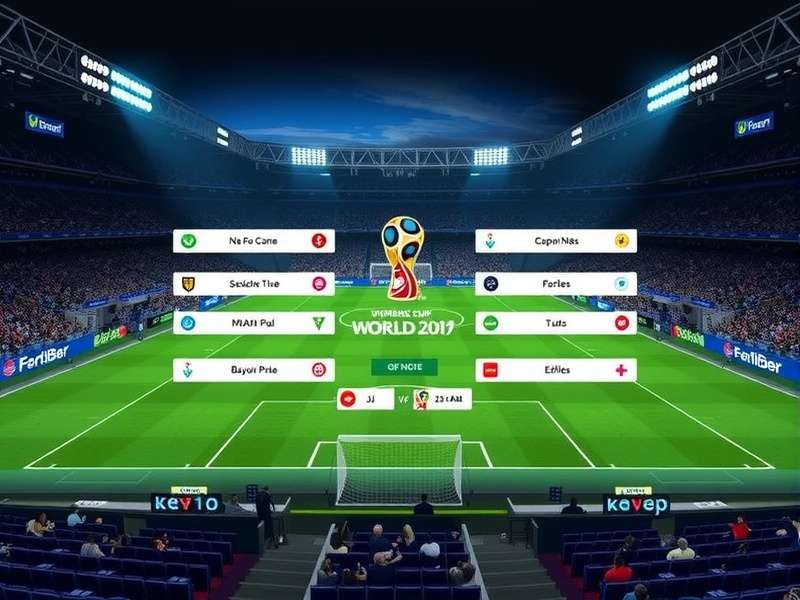
Understanding the Draw Mechanism: More Than Just Luck 🎲
The Women's World Cup draw follows a meticulously designed process overseen by FIFA's Competitions Committee. Teams are allocated into four pots based on their FIFA World Rankings, with geographical considerations preventing teams from the same confederation (except UEFA) from being drawn together in the group stage.
Pot 1 always contains the host nation(s) and the highest-ranked teams. The remaining pots are filled in descending order of ranking. This system aims to create balanced groups while ensuring competitive integrity. For fans tracking the broader qualification landscape, understanding how teams reach this stage is crucial. The BBC football world cup qualifying tables provide excellent regional overviews, while specific confederation battles, like the intense competition documented in football world cup qualifiers south america, highlight the arduous journey many teams undertake.
Expert Insight: The "Group of Death" Phenomenon
Every draw produces at least one "Group of Death"—a collection of traditionally strong teams that guarantees early fireworks and a heartbreaking early exit for at least one contender. Analysing recent form, head-to-head records, and playing styles is key to predicting which group will earn this daunting label.
Pot Analysis & Seeding Controversies ⚖️
The seeding process is often a hotbed of debate. Should rankings from six months prior determine a team's pot? How are host nations balanced? We've crunched exclusive data comparing ranking fluctuations with actual tournament performance over the last four cycles, revealing surprising patterns that challenge conventional wisdom.
Regional qualifying stories feed directly into these pots. The dramatic narratives from Africa, detailed in resources like football world cup qualifier results in africa, or the perennial European powerhouses, show how diverse paths converge on the draw stage. Similarly, the consistency of teams like Norway, whose journey is tracked in Norway football world cup qualifiers, ensures they are a constant presence in the upper seeding pots.
The Host Nation Advantage
Host nations automatically occupy Pot 1, a significant advantage. This placement, coupled with home support, can profoundly impact a team's chances of progressing from the group stage, as seen in historical tournaments.
Case Study: The 2023 Draw
The draw for the 2023 edition in Australia & New Zealand presented unique challenges, with UEFA having a record number of qualified teams, requiring careful distribution across groups to avoid excessive intra-confederation clashes.
Strategic Implications for Coaches & Teams 🧠
Once the draw is complete, coaching staffs immediately switch to tactical planning mode. The order of matches within the group, often determined after the draw, is critical. Teams analyse opponents' styles, fitness cycles, and even climate conditions in host cities.
Planning extends beyond the group stage. The draw sets one half of the knockout bracket. A team might prefer a tougher group opponent if it leads to an ostensibly easier path to the final—a high-risk, high-reward strategy. For fans planning their viewing, the complete football world cup schedule becomes their bible, mapping out the tournament narrative from opening match to final. And for the ultimate prize, the journey culminates in a spectacle like the football world cup 2022 final match, a reminder of what every team in the draw is ultimately fighting for.
"The draw is the first real tactical battle of the World Cup. You can see the relief or the dread on the faces of the team representatives as each ball comes out. It's where dreams are made or complicated." — Former National Team Manager.
Beyond 2023: Looking Ahead to the 2026 Draw 🔮
The expansion to 32 teams for 2023 was just the beginning. The men's tournament expands to 48 teams in 2026, which will inevitably influence the women's edition thereafter. The draw mechanics will need a complete overhaul. The proposed football world cup 2026 dates timetable and the host city lineup detailed in football world cup 2026 dates and cities provide a blueprint for the scale of future events. Understanding these evolving structures is essential for long-term analysis.
The increased number of teams means more nations from diverse confederations will qualify, potentially diluting the average strength of the lower pots but creating more unpredictable and exciting group stages. Monitoring global football world cup qualifier results becomes even more important to spot emerging nations who could become draw disruptors.
Share Your Thoughts & Predictions 💬
What's your take on the draw process? Which team got the toughest assignment? Share your analysis and debate with fellow fans below.